

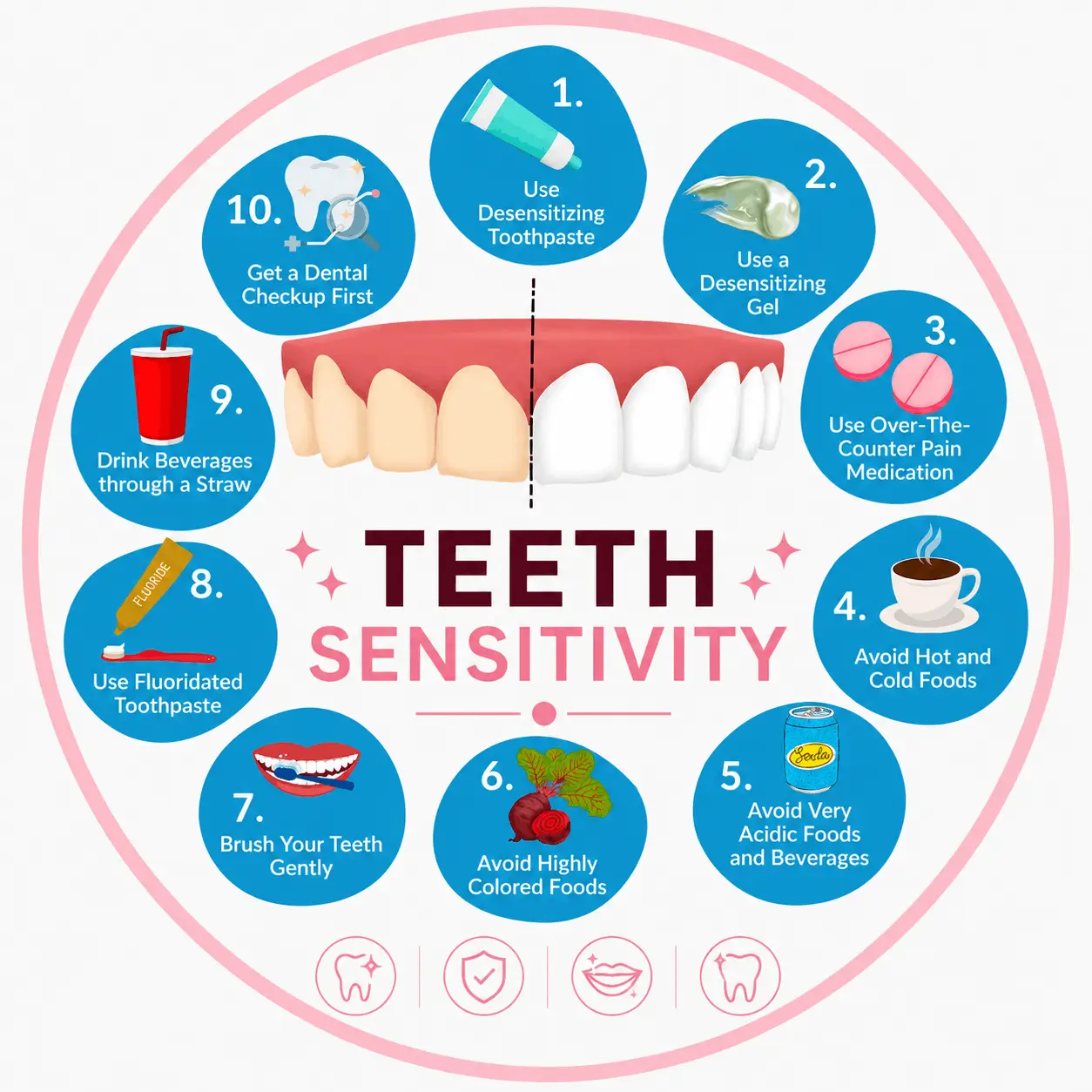
Stop Sharp Twinges When You Eat or Drink
A sudden zap from ice cream, hot tea or sweet foods is more than an annoyance — it often means enamel is worn or gums have receded and exposed dentin. Sensitive teeth treatment finds the cause and calms the nerve pathways so everyday meals feel comfortable again. At Hyderabad Dental Hospital & Implant Centre in Himayatnagar, we provide targeted tooth sensitivity treatment in Hyderabad — from desensitizing care and fluoride therapy to fillings, bonding, gum treatment or night guards when the underlying problem needs more than toothpaste alone.
If sensitivity keeps returning or is getting worse, early diagnosis usually means simpler treatment and better protection for the tooth before decay, cracks or gum disease progress.
What Is Sensitive Teeth Treatment
Tooth sensitivity is a sharp, temporary pain when you eat or drink hot, cold, sweet or acidic foods. It happens when protective enamel wears away or gums recede, exposing the inner dentin layer. Dentin contains tiny tubules that connect toward the nerve — temperature changes and sweets can stimulate them and trigger that sudden twinge.
Common causes include tooth decay, gum disease, worn enamel, teeth grinding, cracked teeth and aggressive brushing. At our Himayatnagar centre, sensitive teeth treatment starts by identifying the exact trigger, then matching care — desensitizing toothpaste guidance, professional fluoride, tooth-colored fillings, bonding for exposed roots, gum treatment, night guards for grinding, laser desensitization when indicated, or root canal treatment for severe nerve-related cases.
Signs You May Need Sensitive Teeth Treatment
You may need sensitive teeth treatment in Hyderabad if twinges interfere with normal eating or drinking. Sensitivity that lasts or spreads is a signal to check for cavities, recession or enamel wear — not something to ignore.
Who Is a Good Candidate
Hot, cold or sweet pain
You get sharp, short pain when temperature or sweetness hits certain teeth.
Worn enamel or recession
Thin enamel, aggressive brushing or gum recession has exposed sensitive dentin.
Cavities, cracks or grinding
Decay, cracks, worn fillings or bruxism can open pathways to the nerve.
Sensitivity that will not settle
Mild irritation may pass; persistent sensitivity needs a dental exam and plan.
Anyone with ongoing tooth sensitivity benefits from a proper check rather than masking symptoms indefinitely. Exam and X-rays when needed show whether fluoride and home care are enough — or whether a filling, bonding, gum care, night guard or further treatment is required.
Step-by-Step Sensitive Teeth Treatment Procedure
Simple desensitizing visits can be quick; treating a cavity, gum issue or grinding habit may need a staged plan for lasting relief.
Symptom & tooth exam
We map which teeth react, how strong the pain is and what triggers it day to day.
Find the cause
Clinical check plus digital X-rays when needed for cavities, cracks, recession or wear.
Desensitizing & fluoride
Professional fluoride and desensitizing agents plus suitable toothpaste guidance.
Restore or protect
Fillings, bonding for exposed roots, or gum treatment when those issues drive pain.
Guard against grinding
Custom night guards when clenching or bruxism keeps opening sensitive pathways.
Review & prevention
Follow-up confirms relief; laser options or root canal care only if clinically needed.
What Is Included in Sensitivity Care
Professional fluoride
In-clinic applications that help strengthen enamel and calm exposed surfaces.
Desensitizing guidance
Toothpaste and home-care advice with agents such as potassium nitrate or stannous fluoride.
Fillings & bonding
Tooth-colored restorations and root bonding when structure or exposure is the cause.
Gum-related care
Treatment when recession or gum disease is exposing sensitive root surfaces.
Night guards
Protection when grinding or clenching keeps wearing enamel and irritating teeth.
Laser options
Laser desensitization when indicated as part of a tailored plan.
Benefits of Treating Tooth Sensitivity Early
Comfortable eating again
Reduce sharp reactions to hot, cold, sweet and acidic foods.
Protect the tooth
Address cavities, cracks or wear before deeper nerve damage develops.
Targeted, not guesswork
Treat the real cause instead of relying only on temporary home remedies.
Often conservative first
Many cases improve with fluoride, bonding or habit changes alone.
Better brushing comfort
Calm surfaces so daily cleaning is less uncomfortable and more consistent.
Longer-lasting relief
Fixing recession, decay or grinding habits helps stop sensitivity returning.
Mild Sensitivity vs Underlying Dental Problems
| Factor | Mild / surface sensitivity | Underlying dental problem |
|---|---|---|
| Typical signs | Brief twinges with cold; settles quickly | Persistent pain; visible decay, cracks or recession |
| First-line care | Desensitizing toothpaste, fluoride, gentle brushing | Fillings, bonding, gum treatment, night guard or further care |
| Risk if ignored | May worsen as enamel or gums change | Decay, gum disease or cracks can progress |
| Visit needs | Often one assessment + home plan | Treatment visits matched to the diagnosis |
| Best action | Still get checked if it keeps returning | Book an exam promptly — do not wait for severe pain |
Aftercare & Prevention
Sensitivity can return if enamel keeps wearing or gums stay inflamed. Daily habits protect the result of treatment.
Tooth sensitivity treatment cost in Hyderabad — what affects price
Tooth sensitivity treatment cost in Hyderabad depends on the underlying cause and the care required — fluoride or desensitizing agents in simpler cases, or fillings, gum treatment, night guards or root canal treatment when needed. After a thorough examination, your dentist recommends a suitable plan with transparent pricing — no fabricated price lists.
Why Choose Hyderabad Dental Hospital & Implant Centre
Root-cause diagnosis
Exam and imaging when needed so care matches cavities, recession, wear or grinding.
Evidence-based options
Fluoride, bonding, restorations, gum care and laser options when indicated.
Comfort-focused plans
Personalized steps to relieve pain and protect teeth for lasting comfort.
Prevention built in
Home-care coaching so sensitivity is less likely to bounce back.
Full restorative backup
From simple desensitizing care to advanced treatment if the nerve is involved.
Himayatnagar location
Accessible sensitive teeth treatment for patients across Hyderabad.
Related Treatments & Next Steps
Explore related care at Hyderabad Dental Hospital & Implant Centre — or see real results and plan your visit in Himayatnagar.
Dental Fillings
Tooth-coloured cavity repair.
Root Canal Treatment
Painless RCT that saves natural teeth.
Teeth Cleaning
Professional scaling and polishing.
Preventive Dentistry
Check-ups, cleaning and early prevention.
Best Dentist in Hyderabad
Why patients choose HDH for specialist dental care.
Dentist in Himayatnagar
Visit our clinic on Minerva Hotel Lane.
Frequently Asked Questions
What is tooth sensitivity, and what causes it?+
Tooth sensitivity is a sharp, temporary pain experienced when eating or drinking hot, cold, sweet or acidic foods. It occurs when protective enamel wears away or the gums recede, exposing dentin. Common causes include tooth decay, gum disease, worn enamel, teeth grinding, cracked teeth and aggressive brushing. At Hyderabad Dental Hospital & Implant Centre, we identify the exact cause and provide personalized treatment for lasting relief.
Why do my teeth hurt when I eat or drink something hot, cold, or sweet?+
Pain occurs because exposed dentin contains tiny tubules that connect toward the tooth’s nerve. Temperature changes or sweet foods stimulate these tubules, causing discomfort. Professional treatment can effectively reduce or eliminate this sensitivity.
Can tooth sensitivity go away on its own?+
Mild sensitivity may improve if caused by temporary irritation, but persistent sensitivity usually requires dental treatment. Ignoring it may allow underlying problems such as cavities, gum disease or cracked teeth to worsen.
How is tooth sensitivity diagnosed?+
Your dentist will examine your teeth and gums, evaluate your symptoms and may take digital X-rays to identify cavities, gum recession, enamel wear, cracked teeth or other underlying causes before recommending the appropriate treatment.
What treatments are available for sensitive teeth?+
Treatment depends on the cause and may include desensitizing toothpaste, professional fluoride application, tooth-colored fillings, bonding for exposed roots, gum treatment, root canal treatment for severe cases, night guards for teeth grinding and laser treatment when indicated.
Can tooth sensitivity be caused by cavities, gum disease, or worn enamel?+
Yes. Tooth sensitivity is commonly caused by dental cavities, gum recession, gum disease, enamel erosion, cracked teeth, worn fillings or teeth grinding. Early diagnosis helps prevent further damage and provides faster relief.
Which toothpaste is best for sensitive teeth, and does it really work?+
Desensitizing toothpaste containing ingredients such as potassium nitrate or stannous fluoride can significantly reduce sensitivity when used regularly. Your dentist will recommend the most suitable toothpaste based on your condition.
Why should I choose Hyderabad Dental Hospital & Implant Centre for tooth sensitivity treatment in Hyderabad?+
Hyderabad Dental Hospital & Implant Centre offers advanced tooth sensitivity treatment in Hyderabad using modern diagnostic technology and evidence-based methods. Our experienced dentists identify the root cause of sensitivity and provide personalized solutions to relieve pain, protect your teeth and restore comfort with lasting results.